

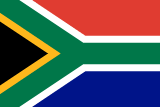
Play as · WW3 2026 · L2 Mid-Power · BRICS+ Founder
South Africa - 2026
The most industrialized African economy. The southern-cone regional anchor. A BRICS founder. A country whose foreign policy operates from the legacy of the anti-apartheid struggle (Soviet, Cuban, Chinese support during the 1980s) more than from current geopolitical alignment. The South African National Defence Force is small relative to the country's economic size and has been hollowed out by years of underfunding.
Starting position
South Africa in 2026 is governed by the Government of National Unity formed after the May 2024 election that ended thirty years of single-party ANC majority rule. The ANC remains the largest party but in coalition with the Democratic Alliance, the Inkatha Freedom Party, and several smaller parties - a configuration that no previous South African government has used. The coalition has produced policy continuity on most files but introduced friction on foreign-policy direction, particularly on Russia and the ICJ-Israel case.
The economy is in chronic crisis. Eskom's load-shedding (rolling power outages) has been the defining domestic issue for over a decade, with crisis-level shortages affecting industrial output and household life through 2023, with intermittent improvement since. Unemployment is structurally high. The Denel state-owned defense industry has struggled financially. The SANDF maintains professional cadre but has not had the equipment-modernization investment a country of South Africa's economic size would normally fund.
Strategic levers
The instruments are economic mass relative to other African states (the second-largest sub-Saharan economy after Nigeria), the BRICS+ founder status that gives South Africa diplomatic positioning beyond the African continent, the longstanding diplomatic relationships across the Global South that the anti-apartheid struggle institutionalized, the African Union leadership relevance, and resource wealth (gold, platinum, chromium, manganese, coal) at globally significant scales.
What turns the campaign
What South Africa wants is the GNU coalition government stabilizing politics, the energy crisis resolved through Eskom reform and renewable generation expansion, the ICJ-Israel case producing reputational and diplomatic gains the ANC base values, and BRICS+ engagement deepening without breaking the structural Western trade and investment relationships the economy depends on.
What South Africa fears is the alignment ambiguity surviving a sharper US-Russia or US-China contest - the 2022 Ukraine UN abstentions and the 2023 Russian-flag-ship Lady-R port incident set the pattern of friction. AGOA (US-Africa trade preferences) renewal in 2025 has been politically tied to South Africa's foreign-policy positions. Domestic political instability if the GNU coalition fractures, energy crisis recurrence, and unemployment-driven xenophobic violence remain structural concerns.
Signature challenge
The legacy-loyalty-versus-economic-reality problem
ANC foreign policy operates from the loyalties of the anti-apartheid struggle - which include Russia, Cuba, China, and the Palestinian movement. The economy operates on Western trade, investment, and AGOA preferences. The two are not in formal tension every day but the friction compounds with each diplomatic position. NationFall surfaces this as the chronic relations question: how does the GNU coalition manage foreign-policy continuity that the ANC base demands while the economic reality the DA prioritizes makes increasingly costly?
Try the South Africa campaign
Free demo. Pick WW3. Pick South Africa. Legacy loyalties, contemporary bills.
Play Free Demo