

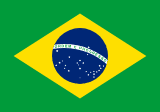
Play as · WW3 2026 · L3 Mid-Power · BRICS+ Founder · Swing
Brazil - 2026
The regional power of South America. The largest economy in Latin America. A BRICS founder. The only mid-power that operates a credible blue-water navy in the South Atlantic - one Atlântico-class light carrier, modernized destroyers, indigenous submarine program. Industrial base anchored by Embraer aerospace and modernizing under recent governments.
Starting position
Brazil in 2026 is governed by Luiz Inácio Lula da Silva, in his third term and managing the political polarization the Bolsonaro era institutionalized. Foreign-policy posture has rotated back toward "active and assertive multi-alignment" - BRICS+ engagement deepened, the China relationship at scale, the EU-Mercosur agreement re-engaged after long delays, the US relationship rebuilt after a strained 2018-2022 period, and continued global-South diplomatic leadership including UN Security Council reform advocacy and the 2024 G20 presidency.
The Brazilian Armed Forces have historically been Amazon and border focused. Modernization has expanded blue-water and aerospace capability: the Atlântico LHD acquired from the UK in 2018, modernized Niterói-class frigates, the Riachuelo-class submarine program with French Scorpène derivatives plus a future indigenous nuclear submarine, the Gripen E/F production line at Embraer's facility in São Paulo, and the C-390 transport that Embraer has exported to NATO members. Defense spending remains modest by mid-power standards (~1.4% of GDP).
Strategic levers
The instruments are economic mass (12th-largest economy globally), the BRICS+ leadership voice, the Embraer aerospace industry that gives Brazil global-supplier status in a way no other Latin American economy approaches, the Amazon stewardship file that increasingly carries climate-diplomacy weight, the South Atlantic blue-water posture that no other Southern Hemisphere mid-power matches, and the diplomatic position as Latin America's near-uncontested regional leader.
What turns the campaign
What Brazil wants is recognition as a global mid-power rather than a regional one - UN Security Council reform that includes a permanent Brazilian seat is a multi-decade diplomatic priority. Multi-alignment surviving sharper US-China contest. The Amazon deforestation trajectory reversed from the 2019-2022 increase trend. EU-Mercosur agreement implementation after the 2024 framework. Continued indigenous defense industry development that Embraer anchors.
What Brazil fears is environmental crisis (Amazon deforestation, climate change effects on agriculture and water) that constrains foreign-policy bandwidth, a forced US-China economic choice that costs whichever side is not chosen, any regional crisis (Venezuela's continued instability, Argentina's chronic economic friction, Bolivia's political fragility) that demands intervention beyond Brazilian capacity, and the Lula-vs-Bolsonaro political polarity producing institutional damage that compounds over electoral cycles.
Signature challenge
The political-polarization-versus-foreign-policy problem
Brazilian foreign policy historically operated above electoral politics - Itamaraty's professional diplomacy maintained continuity through governments left and right. The post-2018 polarization has tested that, with sharply different Lula vs. Bolsonaro foreign-policy postures producing whiplash on relationships across the multi-alignment spectrum. NationFall surfaces this as the chronic strategic-coherence question: each electoral cycle resets some relationships, each reset costs credibility, and the cumulative effect over a decade weakens the strategic position the multi-alignment doctrine depends on.
Try the Brazil campaign
Free demo. Pick WW3. Pick Brazil. Multi-alignment from the world's largest BRICS member.
Play Free Demo