

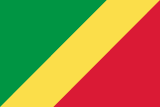
Play as · WW3 2026 · L1 · Brazzaville · Sassou Continuity
Republic of the Congo - 2026
The Republic of the Congo is governed by Denis Sassou Nguesso - in continuous power since the 1997 civil war that returned him to office after his 1979-1992 first tenure, making him among the longest-serving African heads of state. Population about 6M, GDP around $45B PPP. The country sits across the river from the much larger Democratic Republic of the Congo and operates a substantially distinct political-economic identity centered on Brazzaville and the oil-export economy that Pointe-Noire and the offshore production sustain. The strategic identity is the smaller Brazzaville Congo with the Sassou political-institutional continuity, the oil-revenue-dependent fiscal architecture, and the increasingly important Congo basin rainforest carbon-credit positioning that the climate-finance diplomatic agenda has elevated.
Starting position
The Congolese Armed Forces are about 12,000 active personnel, oriented toward border defense, internal security, and limited regional-cooperation deployments. Equipment is mixed and modest. The oil sector - operated by TotalEnergies, Eni, Chevron, and the state-owned Société Nationale des Pétroles du Congo - has been in production decline for several years, with the post-2024 fiscal pressure substantial enough to trigger renewed IMF program engagement. The Congo basin rainforest position has been the principal climate-and-development diplomatic asset, with carbon-credit trading frameworks under negotiation and the Congo Basin Climate Commission framework providing the regional architecture.
What turns the campaign
What the Republic of the Congo under Sassou wants is the political-institutional continuity preserved through the next presidential cycle (the 2026 election is finite, the post-Sassou succession question is structurally significant), the oil-sector decline managed through fiscal consolidation and the carbon-credit-revenue alternative development, the IMF program completed without producing the kind of fiscal consolidation that disrupts the political consensus, the Chinese economic engagement (substantial through the Sassou era, particularly in infrastructure and the Pointe-Noire Special Economic Zone) maintained, and the Congo basin climate-finance positioning advanced at the scale the multilateral architecture is producing. What the Republic of the Congo fears is an oil-revenue collapse beyond fiscal-consolidation capacity, a Sassou succession crisis that the closed political system has not produced an institutional answer to, and a regional crisis (DRC eastern situation, CAR continuing instability) that exceeds Brazzaville's containment capacity.
Signature challenge
The smaller Congo across the river
The Republic of the Congo's central strategic problem is sustaining the Sassou-era political-institutional continuity through the inevitable succession question while managing the oil-revenue decline that the fiscal architecture has been built around. The smaller Congo's political-strategic identity has been substantially shaped by the comparison with the much larger Democratic Republic of the Congo across the river - Brazzaville's stability has been the principal differentiator from Kinshasa's chronic crisis, and the post-Sassou trajectory will determine whether that differentiation continues. NationFall surfaces this as the Republic-of-the-Congo campaign's defining tension: a smaller central African state whose political-institutional continuity has been the principal asset, played out against an underlying economic-and-succession reality that no closed political system has indefinitely deferred.
Try the Republic of the Congo campaign
Free demo. Pick WW3. Pick Republic of the Congo. Brazzaville. Sassou continuity. The smaller Congo.
Play Free Demo as Republic of the Congo