

Play as · WW3 2026
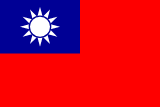
Taiwan - 2026
TSMC produces the most advanced semiconductors in the world. The Taiwan Strait is 130 kilometers wide. The People's Liberation Army has spent two decades building the amphibious, missile, and air capability to cross it. The United States operates under the Taiwan Relations Act - supportive but undefined. And every day the strategic calculation in Beijing changes by some increment that nobody outside Beijing fully understands.
Taiwan plays the survival campaign. Deterrence by porcupine - make any invasion cost more than the political objective is worth. Hold long enough for the United States and Japan to commit. The strategic question is not how to win a war with China. It's how to make the war not happen at all.
Starting position
The 2018 strategic shift toward asymmetric defense - the "Overall Defense Concept" associated with admiral Lee Hsi-min - committed Taiwan to an explicit porcupine posture: prioritize numerous, dispersed, mobile, hard-to-target systems over expensive symmetric platforms. HIMARS, Harpoon coastal-defense missiles, sea mines, and unmanned systems over the next-generation tank or capital ship. Conscription has been extended back to one year. Reservist training has been overhauled.
The geography is fixed. The Central Mountain Range is a defender's friend; the western coastal plain has only a handful of viable beaches and ports. The PLA has visibly rehearsed amphibious and air-blockade operations year after year. The relationship with the United States runs through the Taiwan Relations Act and bilateral arms sales - substantive but ambiguous. NationFall models the bilateral protection bonus as low-strength, reflecting that ambiguity.
What you have
- +Strait geography. 130 kilometers of contested water. PLA amphibious lift remains the binding constraint on any invasion plan. Weather windows narrow the year. Geography is not a strategy, but it is the asset every other plan rests on.
- +Asymmetric inventory. HIMARS, Harpoon coastal launchers, Stinger, sea mines, mobile anti-ship missiles, F-16V upgrades. The porcupine kit that punishes amphibious lift, sealift logistics, and beach concentration. Cheap per platform, lethal in mass.
- +Silicon Shield. TSMC's concentration of advanced-node fabrication makes Taiwan's territorial integrity a global economic interest. The shield is partial - adversaries can choose to absorb the global cost - but it raises the floor of who shows up if the war starts.
- +Mobilizable society. Conscription, reservists, civil defense reform. A population that has lived under standing threat for seventy years and has demonstrated repeatedly the political will to resist. The intangible asset that determines whether the porcupine doctrine actually executes.
What you want
- →Status quo holding. No Chinese move. The strategic objective is the absence of war. Anything that strengthens deterrence - alliance signaling, US arms sales, Japanese statements about the strait - is on-mission.
- →US strategic ambiguity resolved positively in crisis. Treaty ambiguity is intentional. The hope is that ambiguity deters Beijing without committing Washington. The fear is that ambiguity fails the test exactly when the test arrives.
- →Allied signaling from Tokyo, Canberra, Seoul. The first-island-chain partners whose statements about Taiwan shift the deterrent calculus. The goal is making any Beijing move into a multilateral decision, not a bilateral one.
- →Munitions stockpile depth. The first month of an invasion or blockade burns through anti-ship missiles and SAMs at rates US deliveries cannot match in real time. Pre-positioning matters; production rate matters; the political will to keep buying matters.
What you fear
- !Combined amphibious and missile decapitation. A PLA opening that pairs ballistic and cruise missile strike on command and control with simultaneous amphibious assault. The doctrine collapses if leadership is gone in the first hours. Distributed command resilience is the design problem.
- !Blockade rather than invasion. A PLA quarantine - declared, enforced, indefinite - that doesn't trigger the same international response an amphibious assault would. The slower kind of war that strangles the economy and lets time work against the defender.
- !Silicon Shield erosion. Every fab built in Arizona, every fab built in Japan, every diversification of advanced-node production reduces the marginal cost to the world of losing Taiwan. The shield is a depleting asset.
- !US treaty ambiguity failing. Strategic ambiguity is supposed to deter both sides - Beijing from invading, Taipei from declaring independence. If Beijing concludes it doesn't deter, the doctrine has failed in the only way that matters.
Signature challenges
The porcupine-vs-decapitation problem
Asymmetric defense works when command, control, and political legitimacy survive the opening hours. A PLA strike package designed to remove all three changes the calculation. The campaign turns on whether the doctrine can be executed once Taipei is on fire.
The strategic-ambiguity problem
The treaty is intentionally vague. The vagueness is doing work - until the day it isn't. Taiwan has to plan as if the United States will show up and as if it won't. Both planning assumptions cost. NationFall surfaces the ambiguity as a partial protection bonus that is real but contingent.
Try the Taiwan campaign
Free demo. Pick WW3. Pick Taiwan. Make the war not happen.
Play Free DemoOther WW3 powers: USA · China · Japan · South Korea · all nations