

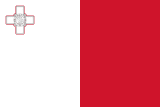
Play as · WW3 2026 · L1 · EU · Constitutionally Neutral
Malta - 2026
Malta is a constitutionally neutral EU member, sitting in the central Mediterranean between Sicily and the North African coast on terrain that made it one of the most fortified positions in Europe through the Second World War and one of the most strategically valued British bases until independence in 1964. Population 540,000, GDP around $30B PPP, financial services and gaming and golden-passport schemes accounting for a substantial portion of the economy. The strategic identity is the small Mediterranean state whose modern strategy is the opposite of its historical strategy - out of the alliance, formally non-aligned, leveraging position and EU membership for influence rather than basing rights.
Starting position
The Armed Forces of Malta are about 2,000 active personnel, organized as a single regiment plus an air wing of helicopters and fixed-wing maritime patrol aircraft, oriented toward maritime search-and-rescue, fisheries enforcement, migration interdiction, and the basic functions of national sovereignty rather than any war-fighting capability. Constitutional neutrality (1987 amendment) commits Malta to non-membership in any military alliance and prohibits foreign military bases on Maltese soil. The relationship with NATO runs through Partnership for Peace (Malta withdrew in 1996 over a Labour government decision and rejoined in 2008). The financial-services and gaming-regulation regimes have been the principal foreign-policy assets, alongside Malta's seat at every EU table.
What turns the campaign
What Malta wants is constitutional neutrality preserved against EU defense integration that may require contributions Malta is not constitutionally permitted to make, the central-Mediterranean migration architecture managed at the EU level rather than left as a bilateral Malta-Italy-Libya problem, the financial-services regime preserved against EU regulatory tightening that targets the small-jurisdiction model (Malta has been on FATF grey-list and off again, the Pilatus Bank and Daphne Caruana Galizia case shadowing the regulatory politics), and the soft-power leverage that comes from EU member-state status without the alliance commitments. What Malta fears is an EU defense provision that questions the constitutional carve-out, an EU financial-services tightening that hollows out the niche the economy depends on, and a Mediterranean security crisis that demands Maltese action the constitution prohibits.
Signature challenge
Neutrality without strategic depth
Malta's central strategic problem is that constitutional neutrality, in a country with the population of a mid-sized European city and an economy weighted to financial services and gaming, has fewer institutional shock absorbers than larger neutral states (Switzerland, Austria) bring to the same posture. Every EU integration step, every Mediterranean security crisis, every regulatory wave from Brussels tests the room the constitution provides. NationFall surfaces this as the Maltese campaign's defining tension: a small island state whose entire strategic identity depends on the room to stay out of the alliance commitments its EU partners increasingly assume, played out in a Mediterranean whose security politics is moving rapidly in directions that compress that room.
Try the Malta campaign
Free demo. Pick WW3. Pick Malta. Constitutional neutrality. Central Mediterranean. Stay out.
Play Free Demo as Malta