

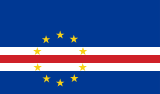
Play as · WW3 2026 · L1 · Atlantic Archipelago · Lusophone Anchor
Cape Verde - 2026
Cape Verde is the Atlantic-archipelago Lusophone-African state - population about 600,000 across ten inhabited islands off the West African coast, GDP around $5B PPP, and the most-institutionally-consolidated of the African Lusophone states by every comparative governance metric. Governed by José Maria Pereira Neves of the African Party for the Independence of Cape Verde (PAICV) since the November 2021 election. The country has the EU Special Partnership framework (since 2007, the most-developed EU bilateral framework with any African state outside the EU's southern Mediterranean neighborhood policy), substantial diaspora populations (more Cape Verdeans live abroad than in Cape Verde itself), and the tourism-and-services-and-fisheries economy that has been progressively diversified. The strategic identity is the Atlantic-archipelago Lusophone-African anchor - Cape Verde's institutional-democratic continuity since the 1990 multi-party transition has been the most consistent in the region, the EU Special Partnership has produced the most-developed African-EU bilateral framework, and the strategic-Atlantic positioning has been continuously valued.
Starting position
The Cape Verde Armed Forces are about 1,200 active personnel, oriented toward maritime patrol of the substantial Atlantic EEZ, internal security, and limited regional-cooperation deployments. Equipment is light. The EU Special Partnership framework has institutionalized the substantial bilateral cooperation including the JEAN-MONNET training, the cooperation in immigration management, the broader development cooperation. The historical strategic-positioning includes the long-running US Air Force engagement at the Sal airport (the historical post-WW2 transit-and-logistics positioning, the Cold-War-era cooperation, the post-2010 reduction), the periodic NATO maritime exercises, and the bilateral Portuguese-Cape Verdean cooperation that has been the most-developed Lusophone bilateral framework.
What turns the campaign
What Cape Verde under Neves wants is the EU Special Partnership framework deepened beyond the post-2007 architecture, the institutional-democratic consolidation preserved through the 2026 election cycle, the tourism-and-services economy maintained against international-environment pressures (the post-pandemic recovery has been substantial; the climate-and-environment vulnerability is structural), the diaspora-remittance flows preserved against international-economic-pressures on the host-country economies (US, Portugal, France, Netherlands particularly), and the regional-cooperation through ECOWAS preserved at whatever level the post-AES-withdrawal architecture supports. What Cape Verde fears is an EU policy shift that compresses the Special Partnership framework, a tourism-economy disruption from regional-security or climate events, a diaspora-remittance crisis if the host-country economies experience downturns, and a domestic political-institutional crisis that the post-1990 democratic continuity has been able to absorb but that the small-state structural conditions could amplify.
Signature challenge
The institutional Lusophone anchor
Cape Verde's central strategic problem is sustaining the institutional-democratic-continuity advantage in a regional environment where the West African political map has been fundamentally restructured by the Sahel-juntas crisis, and where the small-state structural challenges (climate-and-environment vulnerability, diaspora-economic dependency, limited domestic-economic-base) require continuous institutional-and-international-cooperation work. The institutional Lusophone anchor identity is the principal foreign-policy asset; the EU Special Partnership is the principal external-engagement framework; the diaspora is the principal economic and cultural-political reach. NationFall surfaces this as the Cape Verdean campaign's defining tension: an Atlantic-archipelago small state whose institutional-democratic credentials have been the most-celebrated in the regional environment, played out against structural small-state vulnerabilities that the institutional success has not eliminated.
Try the Cape Verde campaign
Free demo. Pick WW3. Pick Cape Verde. Atlantic archipelago. The institutional Lusophone anchor.
Play Free Demo as Cape Verde