

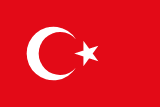
Play as · WW2 1939 · L3 · Neutral
Turkey - 1939
Turkey in 1939 is governed by İsmet İnönü, Atatürk's successor as president since 1938. The strategic posture is hedged between three power systems - Britain and France through the October 1939 Treaty of Mutual Assistance, Germany through the June 1941 non-aggression treaty signed days before Operation Barbarossa, and the Soviet Union through the inheritance of the 1925 Treaty of Friendship that Stalin will challenge late in the war. The Turkish armed forces are mid-tier and modernizing slowly. The strategic positions are the Straits (controlled under the 1936 Montreux Convention) and the chromium mines that supply both German and Allied war industries.
Starting position
Turkish neutrality holds through the war. The diplomatic management is intricate - the British and Americans push at every Tehran-Yalta level for a Turkish entry that would open a Balkan front; the Germans want continued chrome exports and Straits transit denial to Allied warships; the Soviets begin pressing in 1944-45 for revision of the Straits regime that will shape the post-war crisis. Turkey signs the chromium agreement with Germany in early 1941 and continues exports until April 1944, when British and American economic pressure (and the visible turn of the war) forces the cutoff. The Turkish declaration of war on Germany and Japan comes only in February 1945, the qualifying threshold for UN founding-member status.
What turns the campaign
What Turkey wants is the neutrality preserved as the strategic posture between great powers survives the war, the Straits regime defended against Soviet revision (the looming post-war pressure), the chromium exports balanced between blocs without producing decisive retaliation from either, and the late-war declaration timed to qualify for UN status without committing to a war the army is not ready to fight. What Turkey fears is German pressure escalating to invasion through Bulgaria-Greece, Soviet pressure on the Caucasus border (the 1941-44 troop movements are continuous), Allied pressure for entry that would expose Turkish forces to Wehrmacht counter-attack from the Aegean, and the post-war Soviet demands on Kars-Ardahan and the Straits that will define the early Cold War.
Signature challenge
The hedge-between-three-systems problem
Turkish neutrality in WW2 is the diplomatic-craft achievement that the Inönü governments built deliberately and that the post-war Soviet pressure forced into the NATO alignment that defined Turkish strategic identity for the rest of the century. The 1945-47 Soviet pressure on the Straits is what produces the Truman Doctrine and Turkish entry to NATO in 1952. NationFall surfaces this as the chronic Turkish question through the war: how many concessions can be made to which side before the neutrality stops being credible to either?
Try the Turkey campaign
Free demo. Pick WW2. Pick Turkey. Neutrality between three power systems.
Play Free Demo as Turkey