

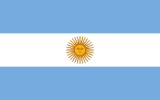
Play as · WW2 1939 · L3 · Neutral
Argentina - 1939
Argentina in 1939 is governed by Roberto Ortiz of the Concordancia coalition. The strategic posture is declared neutral and culturally divided - substantial German and Italian immigrant communities (and political constituencies sympathetic to the Axis), British commercial dominance through the railway and meatpacking industries, and a military leadership that admires German methods. The economy is structurally tied to Britain via the Roca-Runciman trade arrangements; the political-cultural sympathies tilt the other way. The army and navy are mid-tier, with German training influence visible in army doctrine and Italian-supplied naval combatants alongside British-built capital ships.
Starting position
Argentine neutrality survives through the war on the official level, even as the British meat-and-grain trade continues without serious interruption. The December 1939 Battle of the River Plate - the German pocket battleship Graf Spee, damaged by British cruisers, scuttles at Montevideo across the river from Buenos Aires after Uruguayan diplomatic pressure forces the time-limited harboring decision - establishes the Atlantic-coast strategic theater. Argentine internal politics shifts after 1943's military coup, with Juan Perón emerging as the dominant labor-secretary figure that will redefine Argentine politics for half a century. Argentina formally declares war on Germany and Japan only in March 1945, after the Yalta Conference and weeks before Germany's surrender.
What turns the campaign
What Argentina wants is the neutrality preserved through the war - the same strategy that worked in 1914-18 and that the Concordancia and successor military governments believe will preserve regional autonomy from US hemispheric dominance. What Argentina fears is US pressure that escalates from diplomatic to economic to military, regional isolation as Brazil aligns with Washington and the Inter-American system tightens around neutral hold-outs, and the domestic political consequences (1943 coup) of any visible alignment shift. The late-war declaration is the price of UN founding-member status - symbolic enough to qualify, late enough to preserve neutrality's substantive meaning.
Signature challenge
The hemispheric-isolation problem
Argentine neutrality in WW2 was the strategically defensible position in the abstract - and the increasingly diplomatically expensive position in practice. As Brazil aligned with Washington, as Chile aligned, as the rest of Latin America moved one way or another into the Inter-American system, Argentine refusal compounded a hemispheric isolation that post-war Peronism would inherit and convert into a foreign-policy identity. NationFall surfaces this as the chronic question: each refused alignment was small in itself, the cumulative effect was structural.
Try the Argentina campaign
Free demo. Pick WW2. Pick Argentina. Neutrality at the cost of hemispheric standing.
Play Free Demo as Argentina